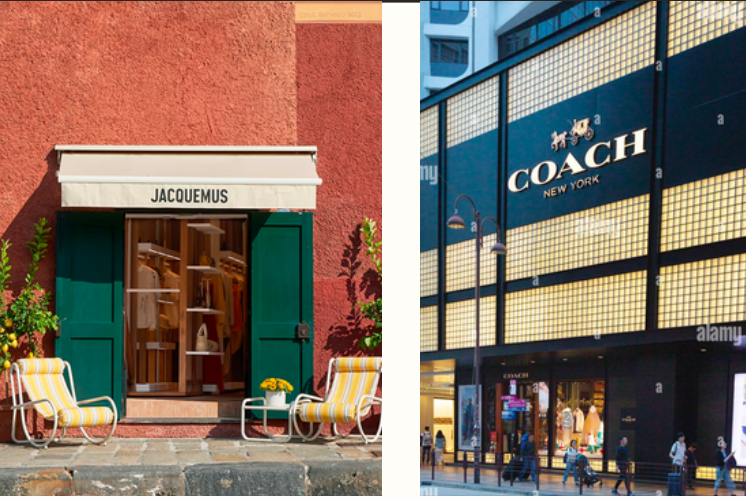
The world of luxury fashion is full of surprises! It’s a place where a sportswear brand can overnight become a luxury market entrant and where a wool suiting company can stop accepting private appointments because it plans to democratize. Such strategic changes are often made to maintain or boost brand equity and improve a brand’s dollar valuation.
Brand equity, a significant and necessary guide to a firm’s marketing strategy, is the value and strength of a brand in the market. It is both a culmination and aggregation of consumer perceptions and experiences, which in turn, influences the prices customers are willing to pay for a brand’s products. This article examines the brand equity of two prominent global luxury brands, Coach and Jacquemus, focusing on key defining variables like brand awareness, image, demand elasticity, and premium pricing.
Brand equity can also be understood as the intangible value arising from the feelings and experiences associated with a brand. Positive brand equity can lead to customer loyalty, which, in most cases, influences the ability to command higher prices and a stronger market position. Key components include brand awareness, perception, differentiators, relevance, loyalty, and overall brand value.
Coach, a leading New York-based leather goods company, was founded in 1941 and is known for its innovative leather processing. Specializing in handbags, luggage, and various luxury accessories, Coach has a strong presence mainly in Japan and America. Despite facing stiff competition and being perceived as more of an accessible luxury brand, Coach maintains a robust financial position and excels in multi-channel marketing and customer service. However, Coach faces challenges like limited geographical market focus and high price points limiting accessibility to a broader consumer base.
To compare the first aspect, Coach, with its long history , has higher brand awareness and a well-known and trusted by multiple generations. Jacquemus, while newer, has rapidly gained awareness through social media and entertainment marketing, appealing predominantly to a younger demographic who seek unique, trend- setting designs.
Coach’s broader market reach and longstanding reputation allows it to command a premium, though its positioning as an accessible luxury brand might limit its price elasticity compared to more exclusive brands. Jacquemus, with its distinctive market position and appeal to niche luxury consumers, can potentially command a higher price premium, especially given its focus on savoir- faire craftsmanship.
When it comes to brand image, Coach’s brand is built on quality and classic styles, appealing to a built on quality and classic styles, appealing to a wide range of consumers. Jacquemus differentiates itself with avant-garde designs and a strong digital presence, making it highly relevant to a younger, digitally-native audience. Coach benefits from longstanding loyal customers who value its heritage, product, and service quality. Jacquemus, with its unique appeal and strong social media presence, has cultivated a dedicated following, predominantly online and with a strong focus on e- commerce. Customers of both brands perceive them in a positive light.
In this comparison, it is clear that given a dedicated namesake founder, high expenditure on digital marketing, and excellence in product design, the Jacquemus brand can demand a higher price from customers. This is evident on product pages where a classic Coach handbag retails around $400, whereas a seasonal signature handbag from Jacquemus retails around $850. As a result, Jacquemus, despite its youth, is a strong brand with inelastic demand. This is attributed to its continuous engagement with its fashion-forward audiences and means that small changes in prices are less likely to drastically reduce the volume of sales.
Brand equity plays a crucial role in understanding a brand’s market performance and value. Coach, with its established customer base and history, faces challenges in brand equity due to its positioning and limited geographical focus. Jacquemus, on the other hand, has quickly built a strong brand image, though it faces the challenge of sustaining its brand equity in the rapidly evolving fashion industry. It is imperative for all brand managers and stakeholders to consider the key elements discussed herein when making decisions. It is especially necessary for younger luxury start-up owners to begin researching and strategizing the type of position and equity they would want their brands to employ in the effort to appropriately target chosen customer segments with their offerings.

Leave a Reply